

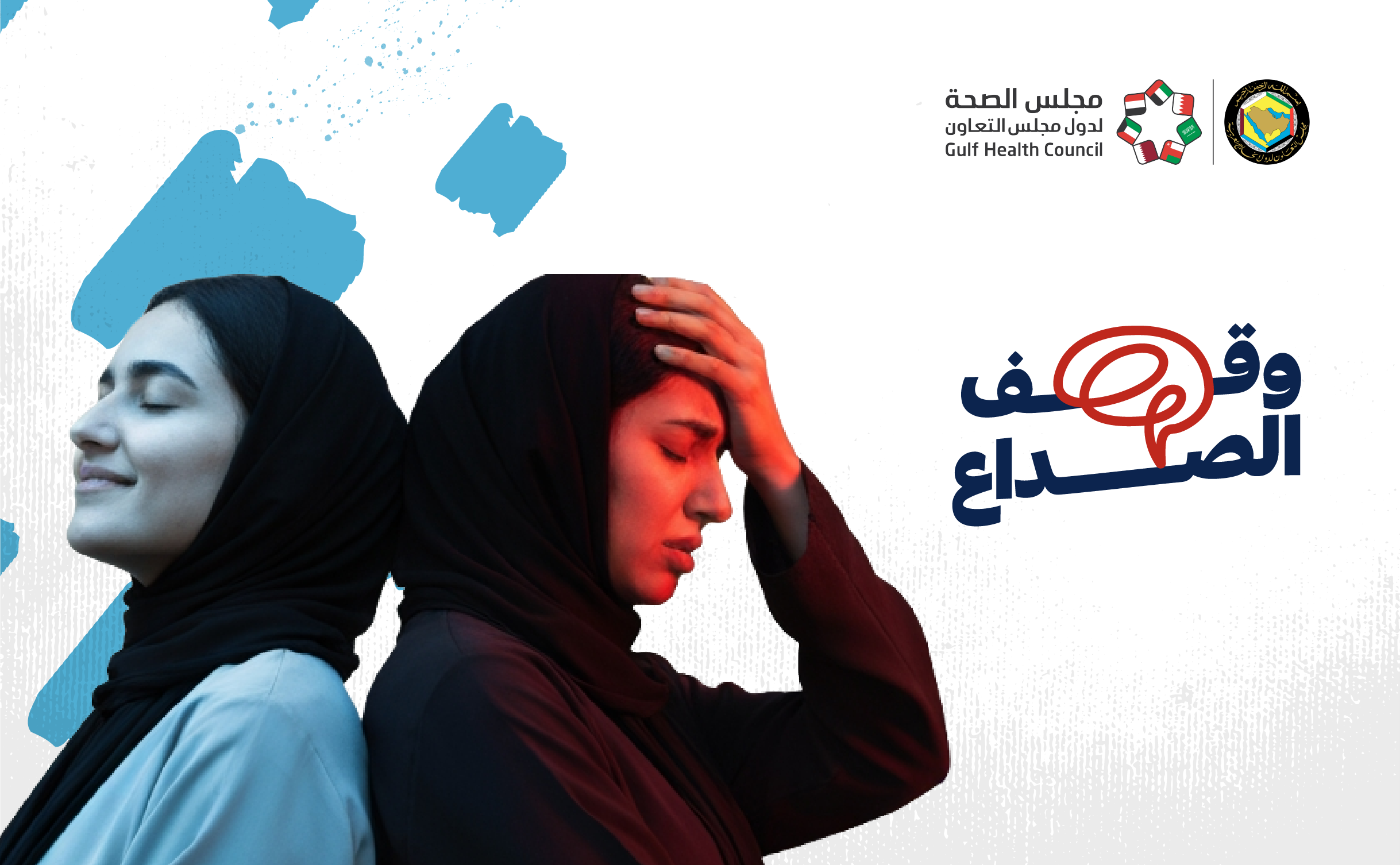
The Gulf Health Council has launched an awareness campaign entitled “Stop Headache,” aiming to raise public awareness about common types of headache, their causes, and methods of prevention. The campaign emphasizes the importance of adopting a healthy lifestyle, the safe use of painkillers, and educating the community on warning signs that require consulting a physician.
The campaign seeks to empower individuals to distinguish between the most common types of headache, such as migraine, tension-type headache, and headache resulting from the overuse of painkillers. This, in turn, helps people choose the healthiest ways to manage pain and avoid its triggers.
The campaign includes a series of awareness products and interactive media materials shared through the Council’s digital platforms. These include an interactive test designed to assess individuals’ knowledge and health behaviors, through which participants receive tailored advice based on their answers to support their ability to control headaches and improve their quality of life.
The campaign also features an educational guide, awareness posts, and multi-media educational content highlighting the most common headache triggers, such as stress, lack of sleep, excessive caffeine intake, dehydration, prolonged screen use, and hormonal imbalances.
The campaign focuses on two main target groups:
- Individuals living with migraine
- People at risk of tension-type headaches, such as students, office workers, physicians, teachers, and employees in high-stress environments
In addition, it targets the broader Gulf community aged 18 and above, as well as all entities from the public, private, and non-profit sectors.
The campaign highlights a set of key awareness messages, most notably:
- Raising health awareness about the differences between common types of headache and their causes to identify the most appropriate treatment option.
- Empowering individuals with knowledge on prevention methods and how to reduce headache triggers.
- Correcting misconceptions related to headache and promoting a culture of consulting a doctor when needed.
- Educating the community about healthy lifestyle habits (adequate sleep, balanced nutrition, stress management, and physical activity).
- Raising awareness of the importance of safe use of painkillers to avoid headaches caused by their overuse.
Studies indicate that headache is one of the most common neurological disorders worldwide, affecting around 40% of the population (equivalent to about 3.1 billion people globally). Despite the availability of effective treatments, it is often underestimated or self-managed without medical consultation.
The Council explained that headache is not merely a passing pain, but can be disabling to daily life, as recurrent attacks affect the professional and social performance of those affected. It pointed out that migraine is among the most impactful conditions on quality of life worldwide for people aged 15–49 years.
Studies have also shown that increasing caffeine consumption by 100 mg per day may raise the likelihood of developing migraine by 5%, while drinking water regularly and engaging in physical activity can reduce the frequency of attacks and improve quality of life by up to 40%.
The Gulf Health Council calls on all members of the community to participate in the campaign by visiting the campaign page on the “Your Health Guide” platform and taking the interactive headache test to learn about the most likely type of headache they experience and how to manage it safely. The Council stresses that “awareness of the difference… makes a difference in quality of life.”
The test and all campaign awareness materials can be accessed via the “Your Health Guide” platform at the following link: